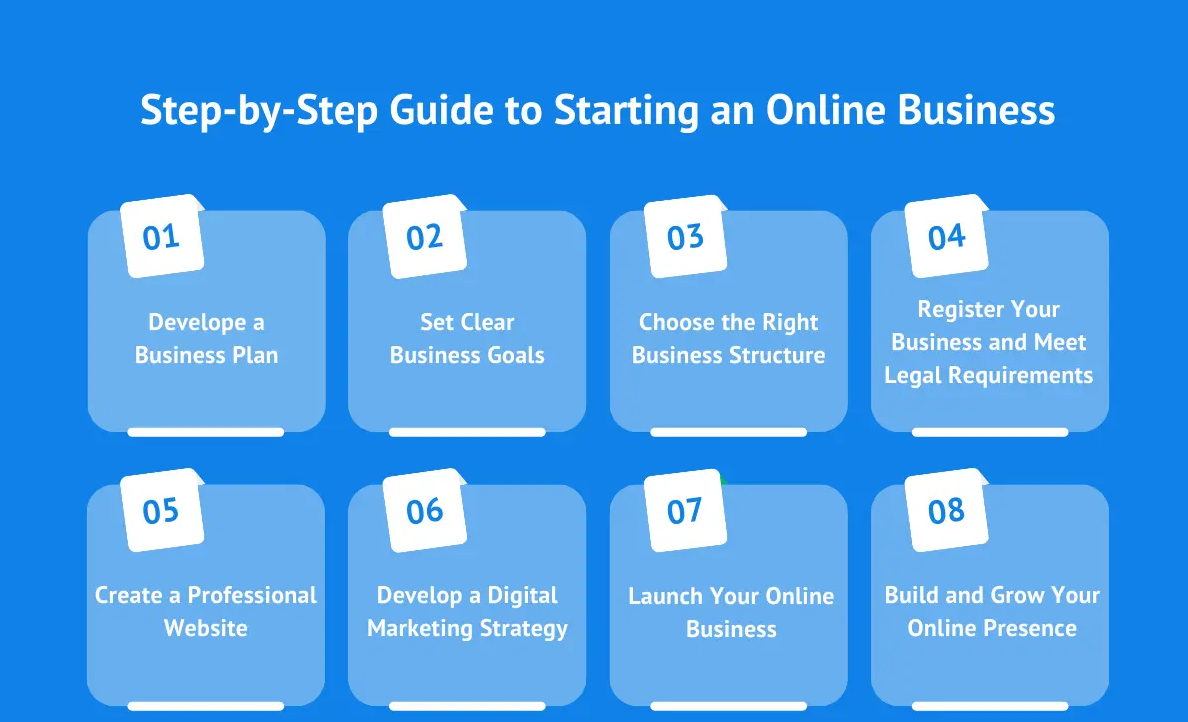
Building a successful online business is one of the most powerful ways to achieve financial independence, flexibility, and long-term growth in today’s digital economy. Whether you’re starting from scratch or transitioning from a traditional business model, the internet offers endless opportunities to create, scale, and automate income streams.
In this comprehensive step-by-step guide, you’ll learn exactly how to build a profitable online business from the ground up—even if you’re a complete beginner.
1. Choose the Right Business Idea
Every successful online business starts with a solid idea. But not just any idea—your business concept should solve a real problem or fulfill a specific need.
How to Find the Right Idea:
- Identify your skills, passions, or expertise
- Look for problems people are actively trying to solve
- Research trending markets and niches
- Validate demand through online tools (Google Trends, forums, marketplaces)
Popular Online Business Models:
- E-commerce (selling physical or digital products)
- Affiliate marketing
- Online courses or coaching
- Freelancing or services
- Subscription-based platforms
Pro Tip: Focus on a niche market instead of targeting everyone. Narrow audiences convert better.
2. Conduct Market Research
Before investing time and money, you must understand your market.
Key Areas to Research:
- Target audience (age, interests, problems)
- Competitors (what they offer, pricing, strategy)
- Market demand and trends
Tools You Can Use:
- Google Trends
- Keyword research tools (Ahrefs, SEMrush)
- Social media platforms (Facebook groups, Reddit)
- Amazon and marketplace reviews
Questions to Answer:
- Who is your ideal customer?
- What are their biggest pain points?
- How are competitors solving the problem?
Understanding your audience deeply will help you position your business effectively.
3. Define Your Unique Value Proposition (UVP)
Your Unique Value Proposition is what sets you apart from competitors.
A Strong UVP Should:
- Clearly explain what you offer
- Highlight the benefits
- Show why you’re different
Example:
Instead of: “We sell fitness programs”
Try: “We help busy professionals lose weight in 30 days without strict diets.”
Your UVP should instantly answer:
“Why should customers choose you?”
4. Build Your Brand Identity
Branding is more than just a logo—it’s how people perceive your business.
Key Elements of Branding:
- Business name
- Logo and color scheme
- Voice and tone
- Brand message
Tips for Strong Branding:
- Keep it simple and memorable
- Be consistent across all platforms
- Align your brand with your target audience
A strong brand builds trust and makes your business stand out in a crowded market.
5. Create a Professional Website
Your website is your online storefront. It must be fast, user-friendly, and optimized for conversions.
Essential Pages:
- Homepage
- About page
- Product/service pages
- Contact page
- Privacy policy and terms
Key Features:
- Mobile-friendly design
- Fast loading speed
- Clear call-to-action (CTA)
- Secure payment options
Platforms You Can Use:
- WordPress (flexible and powerful)
- Shopify (best for e-commerce)
- Wix or Squarespace (easy for beginners)
Pro Tip: Focus on user experience (UX). A clean and simple layout converts better than a cluttered design.
6. Develop High-Quality Products or Services
Your success depends on the value you deliver.
For Products:
- Ensure quality and reliability
- Use appealing packaging and branding
- Offer competitive pricing
For Services:
- Clearly define your offerings
- Provide real results
- Deliver excellent customer experience
Test Before Scaling:
Start small, gather feedback, and improve your offering before expanding.
7. Set Up Payment and Delivery Systems
You need a smooth system for transactions and fulfillment.
Payment Options:
- Credit/debit cards
- Digital wallets (PayPal, Stripe)
- Local payment gateways (depending on your country)
Delivery Options:
- Digital downloads (instant delivery)
- Physical shipping (logistics partners)
- Service scheduling (booking systems)
Automation is key—use tools that simplify the process and save time.
8. Create a Marketing Strategy
Without marketing, your business won’t grow.
Core Marketing Channels:
1. Search Engine Optimization (SEO)
- Optimize your website for keywords
- Create valuable blog content
- Build backlinks
2. Social Media Marketing
- Choose platforms where your audience spends time
- Post consistently
- Engage with your followers
3. Paid Advertising
- Facebook Ads
- Google Ads
- TikTok Ads
4. Email Marketing
- Build an email list
- Send newsletters and promotions
- Use automation sequences
Content Ideas:
- Tutorials
- Reviews
- Case studies
- Behind-the-scenes content
Consistency is more important than perfection.
9. Focus on Traffic Generation
Traffic is the lifeblood of your online business.
Free Traffic Sources:
- SEO
- Social media
- Content marketing
- YouTube
Paid Traffic Sources:
- Facebook Ads
- Google Ads
- Influencer marketing
Tips for Increasing Traffic:
- Use compelling headlines
- Create shareable content
- Collaborate with others in your niche
Important: Always track your traffic sources and optimize what works.
10. Optimize for Conversions
Getting visitors is only half the battle—you need to convert them into customers.
Conversion Optimization Tips:
- Use clear and persuasive CTAs
- Add testimonials and social proof
- Offer limited-time deals
- Simplify the checkout process
A/B Testing:
Test different versions of:
- Headlines
- Images
- Pricing
- Layouts
Small improvements can lead to big increases in revenue.
11. Build Customer Relationships
Long-term success comes from loyal customers.
Ways to Build Relationships:
- Provide excellent customer support
- Personalize communication
- Offer loyalty programs
- Ask for feedback
Use Email Marketing:
- Welcome sequences
- Follow-ups
- Exclusive offers
Happy customers become repeat buyers and brand advocates.
12. Automate and Scale Your Business
Once your business is stable, focus on growth and automation.
Automation Tools:
- Email automation (Mailchimp, ConvertKit)
- CRM systems
- Chatbots
- Scheduling tools
Scaling Strategies:
- Launch new products
- Expand to new markets
- Increase ad budget
- Build a team
Outsourcing:
Hire freelancers or agencies for:
- Content creation
- Customer service
- Marketing
Work smarter, not harder.
13. Track Performance and Improve
Data-driven decisions are essential.
Key Metrics to Track:
- Website traffic
- Conversion rate
- Customer acquisition cost (CAC)
- Lifetime value (LTV)
- Return on investment (ROI)
Tools:
- Google Analytics
- Heatmaps (Hotjar)
- CRM dashboards
Regularly analyze your data and adjust your strategy.
14. Stay Consistent and Adapt
Success doesn’t happen overnight. Consistency is key.
Challenges You May Face:
- Low traffic in the beginning
- Competition
- Technical issues
- Changing trends
How to Overcome:
- Keep learning
- Stay updated with industry trends
- Test new strategies
- Never stop improving
Persistence separates successful entrepreneurs from those who quit.
15. Legal and Financial Considerations
Don’t overlook the legal side of your business.
Important Steps:
- Register your business (if required)
- Understand tax obligations
- Create terms and privacy policies
- Protect customer data
Financial Management:
- Track income and expenses
- Set a budget
- Reinvest profits for growth
A strong foundation ensures long-term sustainability.
Conclusion
Building a successful online business is a journey that requires planning, execution, and continuous improvement. By following this step-by-step guide, you can turn your idea into a profitable digital venture.
Key Takeaways:
- Start with a validated idea
- Understand your audience deeply
- Build a strong brand and website
- Focus on marketing and traffic
- Optimize conversions and customer experience
- Automate and scale strategically
The online world is full of opportunities—but only those who take action will succeed.
Start today, stay consistent, and your online business can become a powerful source of income and freedom.